Machu Picchu and the Incas are inseparable parts of one of the most fascinating stories in world history. Perched high in the Peruvian Andes, Machu Picchu stands as a remarkable testament to the ingenuity, spirituality, and engineering skills of the Inca civilization.
Every year, millions of travelers visit this ancient citadel to learn more about the people who built it and the role it played within the vast Inca Empire. Understanding the connection between Machu Picchu and the Incas offers valuable insight into one of the most advanced civilizations in pre-Columbian America.
Who Were the Incas?
The Incas were the rulers of the largest empire in pre-Columbian America. Known as the Inca Empire or Tawantinsuyu, their territory stretched across much of western South America, including present-day Peru, Ecuador, Bolivia, and parts of Chile, Argentina, and Colombia.
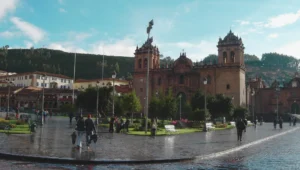
Their capital was Cusco, which served as the political, religious, and cultural center of the empire.
The Incas developed sophisticated agricultural systems, extensive road networks, advanced stonework, and a highly organized society.
Who Built Machu Picchu?
Most historians believe that Machu Picchu was built during the 15th century under the rule of Pachacútec, one of the most influential leaders in Inca history.
Pachacútec transformed a small kingdom into a powerful empire and oversaw the construction of important administrative, ceremonial, and agricultural centers throughout the Andes.
Machu Picchu is widely regarded as one of his greatest achievements.
Why Did the Incas Build Machu Picchu?
The exact purpose of Machu Picchu remains a topic of research and discussion. However, scholars generally agree that it likely served several functions.
Royal Estate
Many researchers believe Machu Picchu was a royal retreat used by Pachacútec and members of the Inca elite.
Ceremonial Center
The presence of temples, sacred plazas, and ritual spaces suggests that the site played an important religious role.
Astronomical Observatory
The Incas closely observed the movements of the sun, moon, and stars. Several structures at Machu Picchu appear to have been aligned with astronomical events.
Agricultural Center
Its extensive terraces demonstrate advanced farming techniques that helped support the local population.
Inca Architecture at Machu Picchu
One of the most impressive aspects of Machu Picchu is its architecture.
The Incas mastered a construction technique known as ashlar masonry, where stones are carefully cut and fitted together without mortar.
Key architectural features include:
- Precisely carved stone blocks
- Earthquake-resistant construction
- Sophisticated drainage systems
- Terraced agricultural areas
- Integration with the surrounding landscape
These innovations have allowed many structures to survive for centuries despite earthquakes and harsh mountain conditions.
Important Areas of Machu Picchu
Agricultural Sector
The agricultural terraces are among the most recognizable features of Machu Picchu. They helped prevent erosion while providing space for crop cultivation.
Urban Sector
This area contains residential buildings, plazas, pathways, and communal spaces.
Religious Sector
Several temples and ceremonial structures highlight the spiritual significance of the site.
Among the most notable are the Temple of the Sun and the Intihuatana stone.
The Spiritual World of the Incas
Religion played a central role in Inca society.
The Incas worshipped natural elements such as the sun, mountains, rivers, and the earth. Mountains were considered sacred beings known as apus and were believed to protect local communities.
The location of Machu Picchu among towering Andean peaks reflects this deep spiritual connection with nature.
Many of the site’s structures were carefully positioned to align with sacred landscapes and celestial events.
Why Was Machu Picchu Abandoned?
Following the arrival of the Spanish in the 16th century, many Inca settlements were gradually abandoned.
Although historians do not know the exact reasons why Machu Picchu was deserted, political upheaval, population decline, and changing social conditions may have contributed.
Interestingly, the Spanish never documented the site, which helped preserve it from destruction.
Machu Picchu’s Legacy Today
Today, Machu Picchu is one of the most recognizable symbols of Peru and one of the world’s most celebrated archaeological sites.
Visitors come not only to admire its beauty but also to understand the extraordinary achievements of the Inca civilization.
The site continues to inspire archaeologists, historians, and travelers from around the globe.
Interesting Facts About Machu Picchu and the Incas
- Machu Picchu was built approximately 2,430 meters (7,970 feet) above sea level.
- The city was constructed without the use of iron tools.
- The Incas developed an extensive road network connecting their empire.
- Machu Picchu is recognized as a UNESCO World Heritage Site.
- It is one of the New Seven Wonders of the World.
Frequently Asked Questions
Who built Machu Picchu?
Most historians attribute its construction to the Inca ruler Pachacútec during the 15th century.
Was Machu Picchu a city?
It was likely a royal, ceremonial, and administrative center rather than a large urban city.
Why is Machu Picchu important?
It represents one of the greatest achievements of Inca engineering, architecture, and culture.
Did the Spanish discover Machu Picchu?
There is no evidence that Spanish conquistadors ever documented or occupied the site.
What is the connection between Machu Picchu and the Incas?
Machu Picchu was built and used by the Inca civilization and remains one of its most important surviving monuments.
Conclusion
The story of Machu Picchu and the Incas is a remarkable example of human creativity, engineering, and cultural achievement. From its breathtaking mountain setting to its sophisticated architecture, Machu Picchu continues to showcase the enduring legacy of one of the greatest civilizations in the Americas.
For travelers exploring Peru, visiting Machu Picchu is more than a sightseeing experience—it is an opportunity to connect with the history, knowledge, and spirit of the Inca world.